LO 3
Logo variations
What did I do
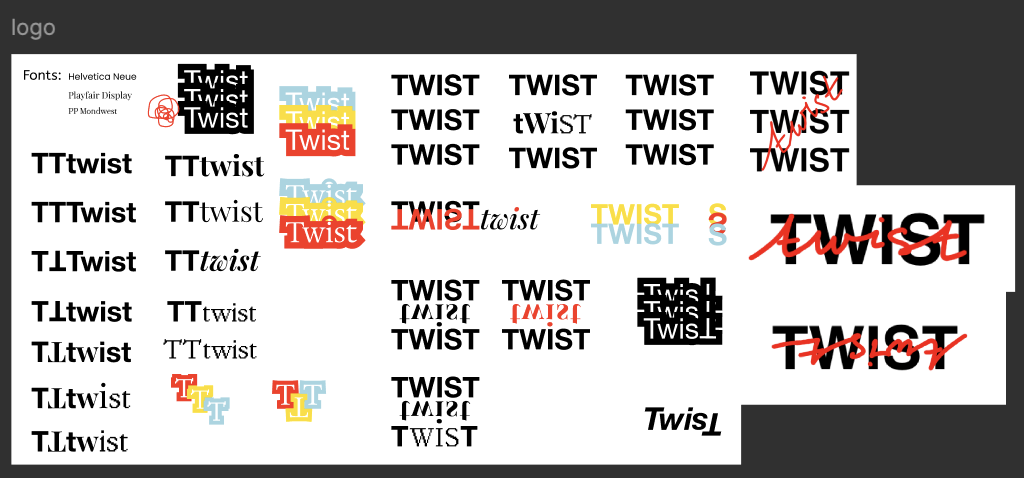
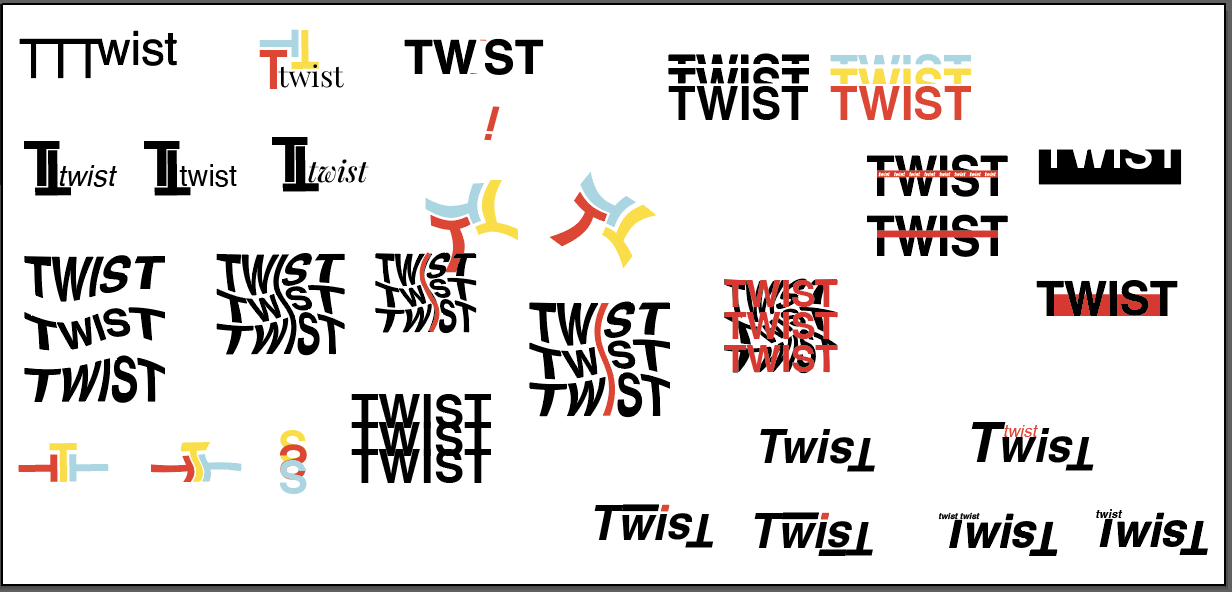
I created many versions of our group logo. I played with different fonts, colors, and letter positions. I started with small ideas and kept building more. Every time I finished one version, I had more ideas to try. I kept going until I had many options to choose from.
How did it go
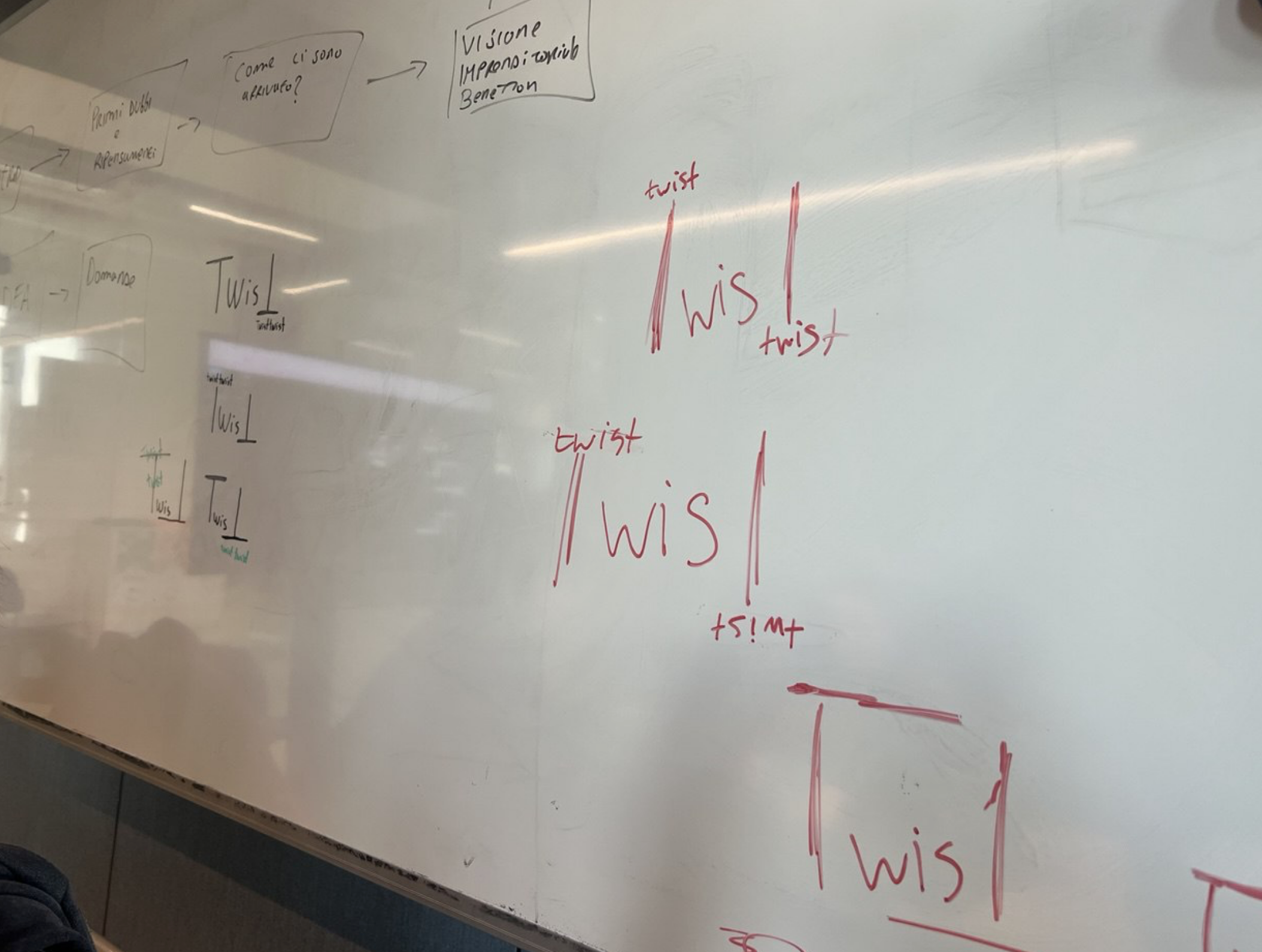
It was a fun and creative process. Trying different styles helped me understand what worked best. I shared my ideas with my group and our teachers. Their feedback helped me see which design was strongest, and I used that to make the final logo.
What did I learn
I learned that trying many versions helps me find better ideas. Even small changes made a big difference. I also learned that feedback is very useful when I feel unsure. It helped me choose with more confidence.
Retrospective
Next time, I would save more versions during the process to compare them better. I’d also ask for feedback earlier, not just at the end. But overall, I’m happy I explored many ideas before choosing the final one.
Some variations for Concept poster
What did I do
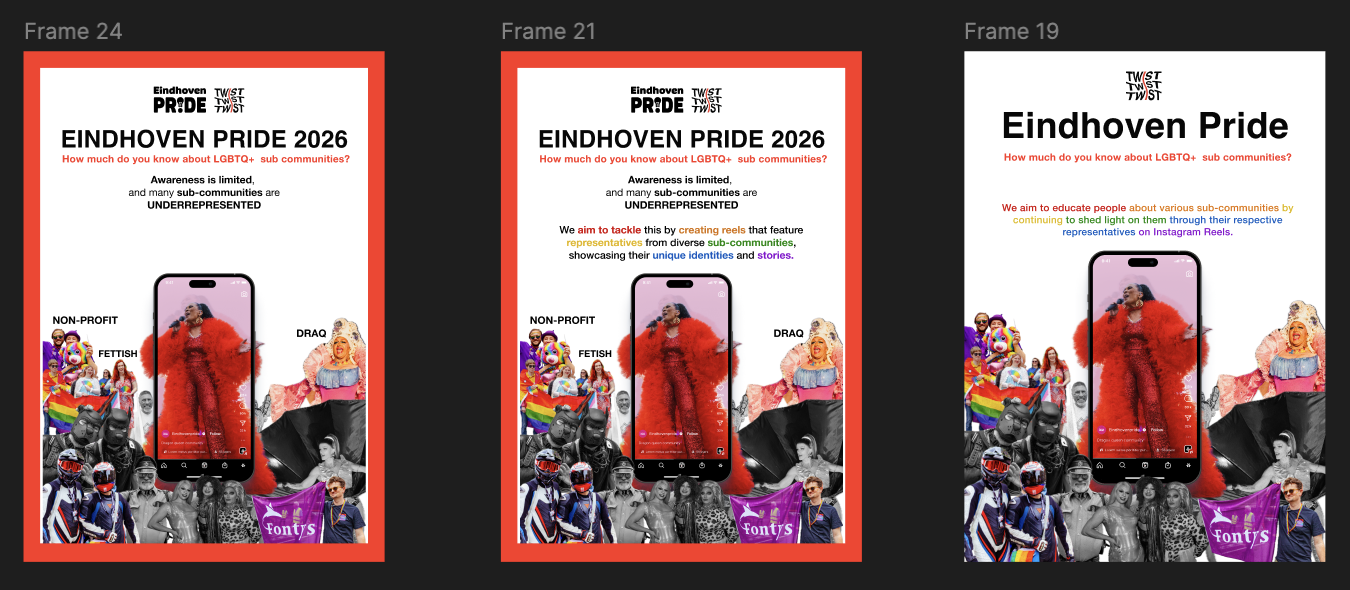
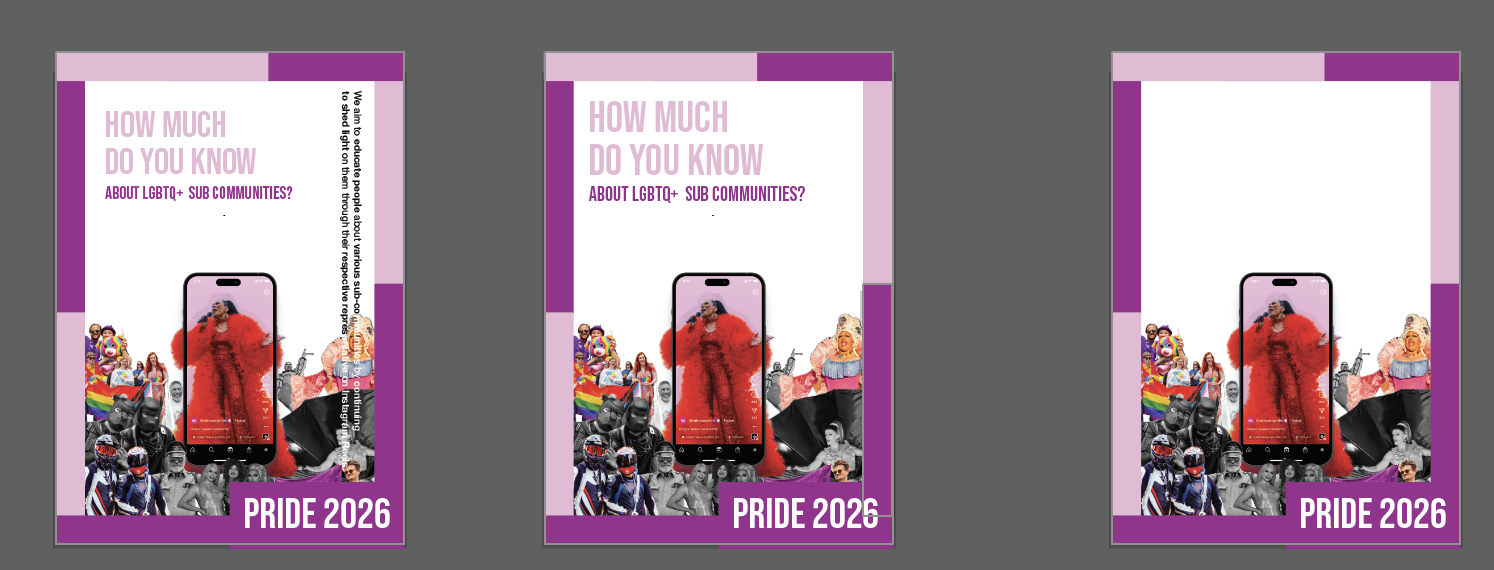
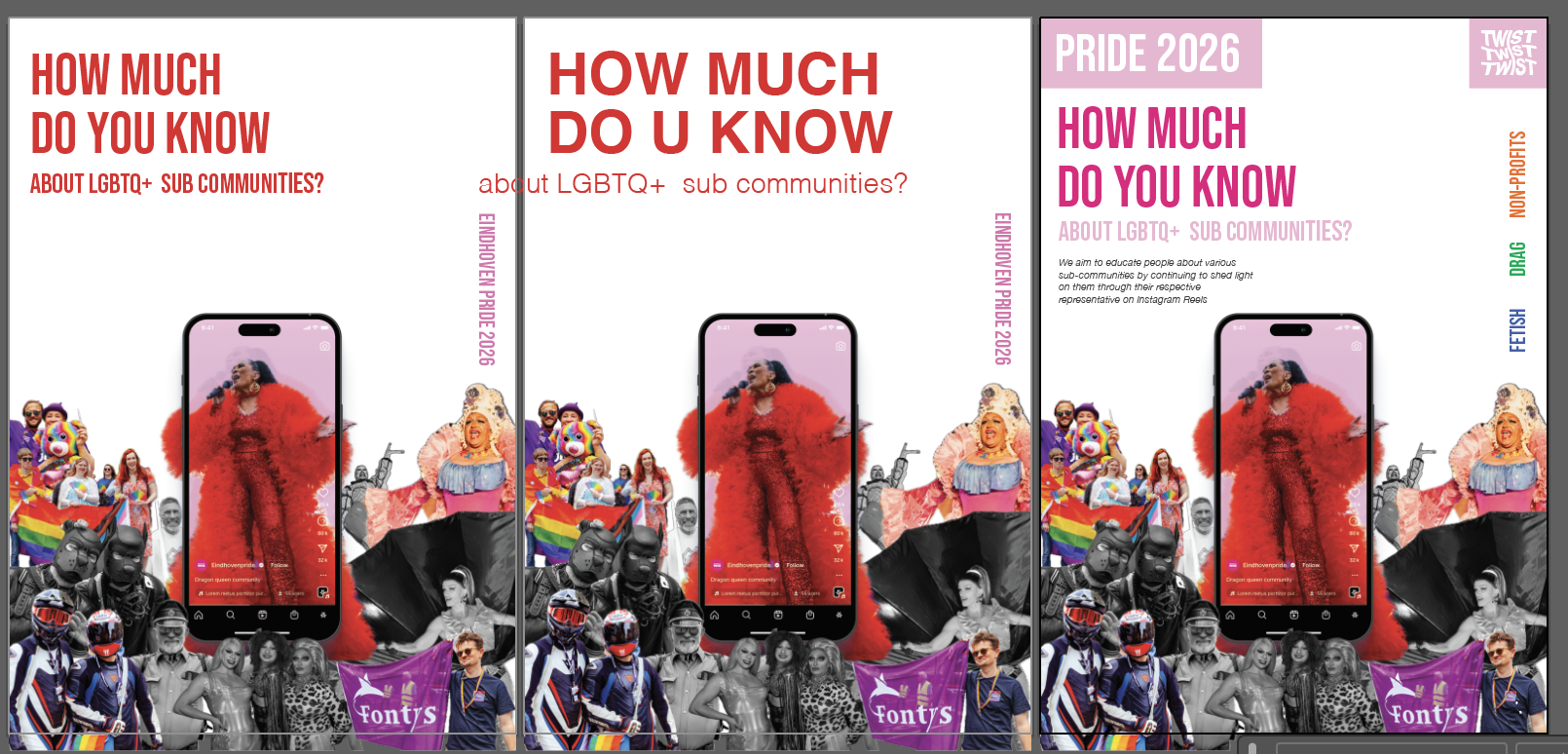
I took the different design ideas from my groupmates and combined them into one concept poster, trying to match everyone’s style. Since I had to finish the design in Adobe InDesign, I made sure it looked balanced. We also got feedback from the teacher and made changes based on that.
How did it go
At first, I felt stuck after the teacher gave a lot of feedback. He helped guide me with examples, but it was still a bit confusing. So, I had a call with my groupmates, and together we agreed on the final idea. Then I finished the design in InDesign for printing.
What did I learn
I learned that design takes time and can change a lot through feedback. I saw how helpful it is to work together when things feel unclear. The process taught me to be more open to trying new directions, even when it’s challenging.
Retrospective
Next time, I would keep track of each version I make to better see how the design improves. I’d also plan group check-ins after getting feedback, so we can decide together what to change and move forward faster.
Storyboards for Animated Logo
What did I do
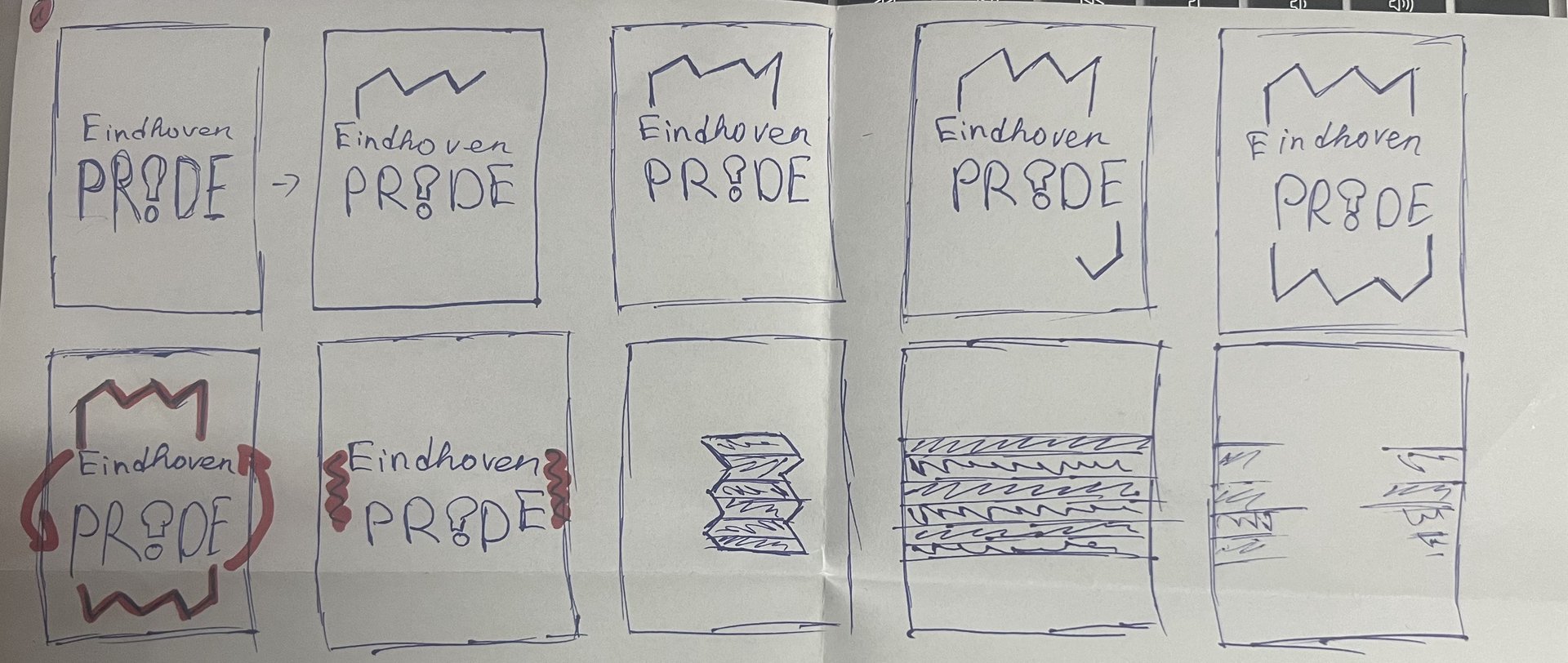
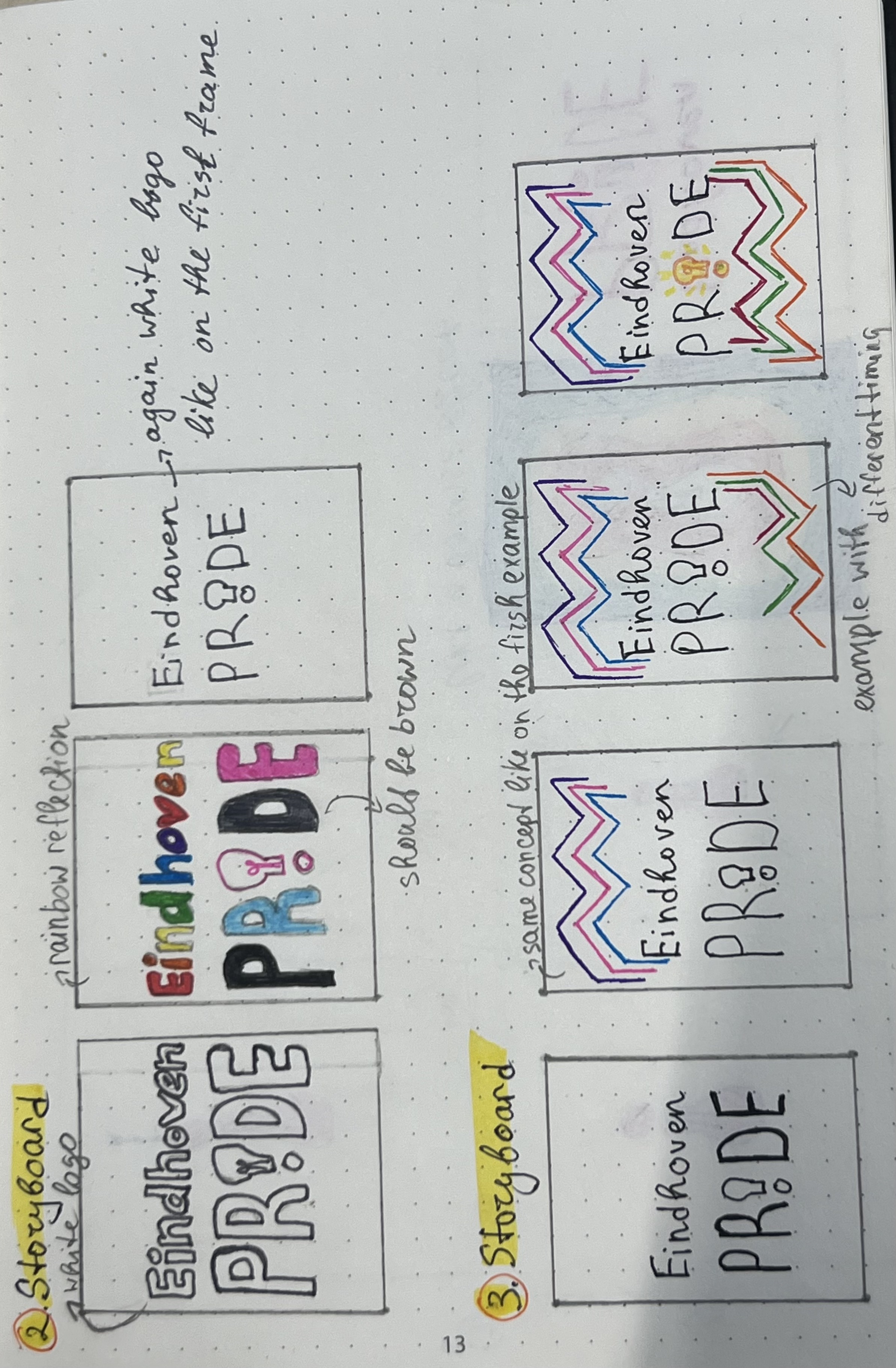
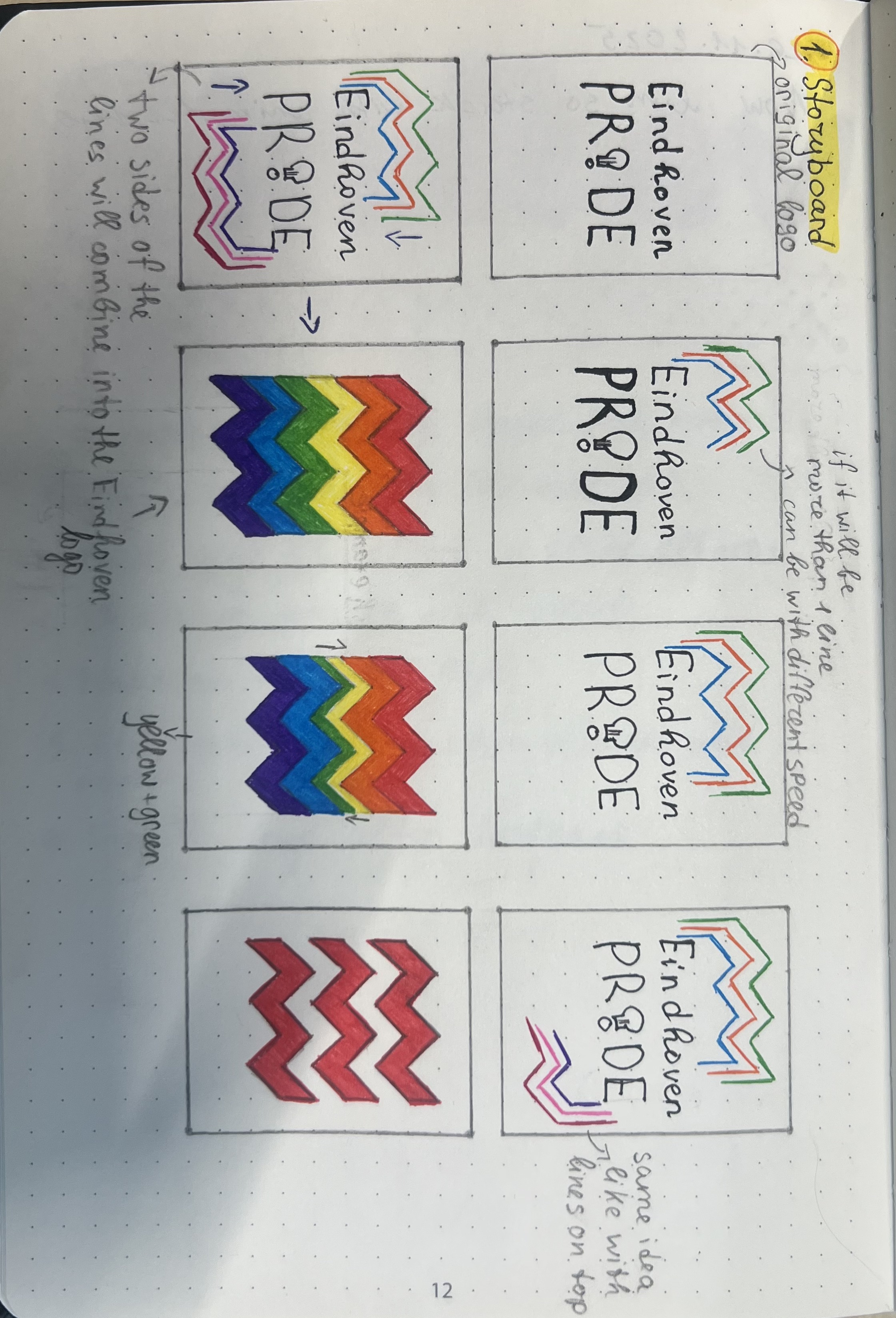
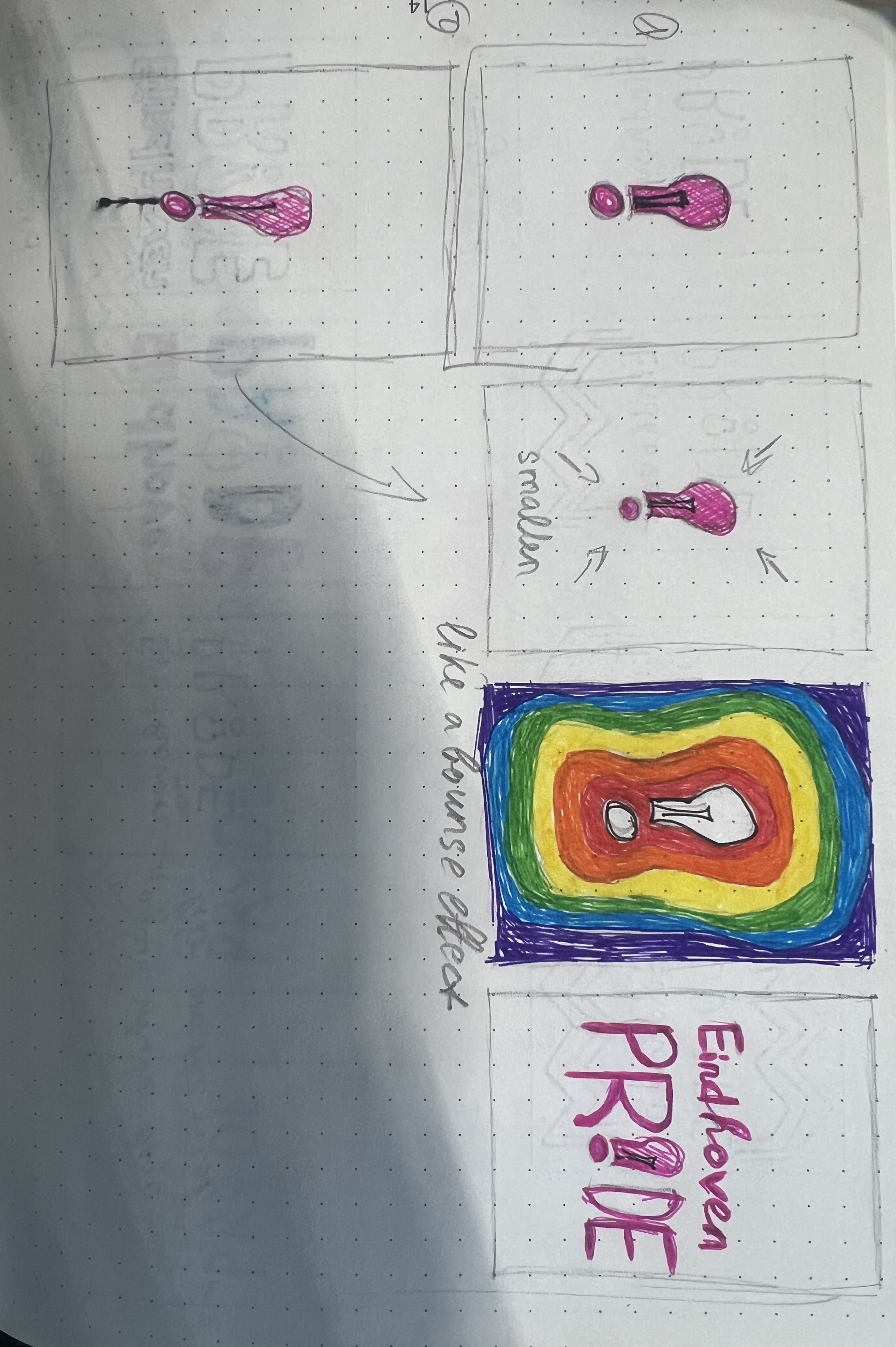
Before animating the logo, I created several prototypes and storyboards to explore different ideas. I began with a quick sketch, then developed three storyboard versions showing transitions and colors. I shared these with my groupmates and teacher, and used their feedback to guide my next steps.
How did it go
The feedback helped me realize that the original logo should appear at the end and that the animation needed more energy. I agreed with the suggestions and researched more animated logos for inspiration, which helped me refine my concept and create stronger versions.
What did I learn
I learned that developing visual ideas through multiple iterations leads to better results. Storyboarding helped clarify the motion and timing, and feedback showed me how small changes—like pacing or final placement—can improve the overall impact of the animation.
Retrospective
Next time, I’d test the animation digitally earlier, so I can see how the transitions work in motion, not just on paper. I’d also ask for feedback in stages to catch design issues before moving forward with the full animation.
Filming angles for Non-Profit (B-roll)
What did I do
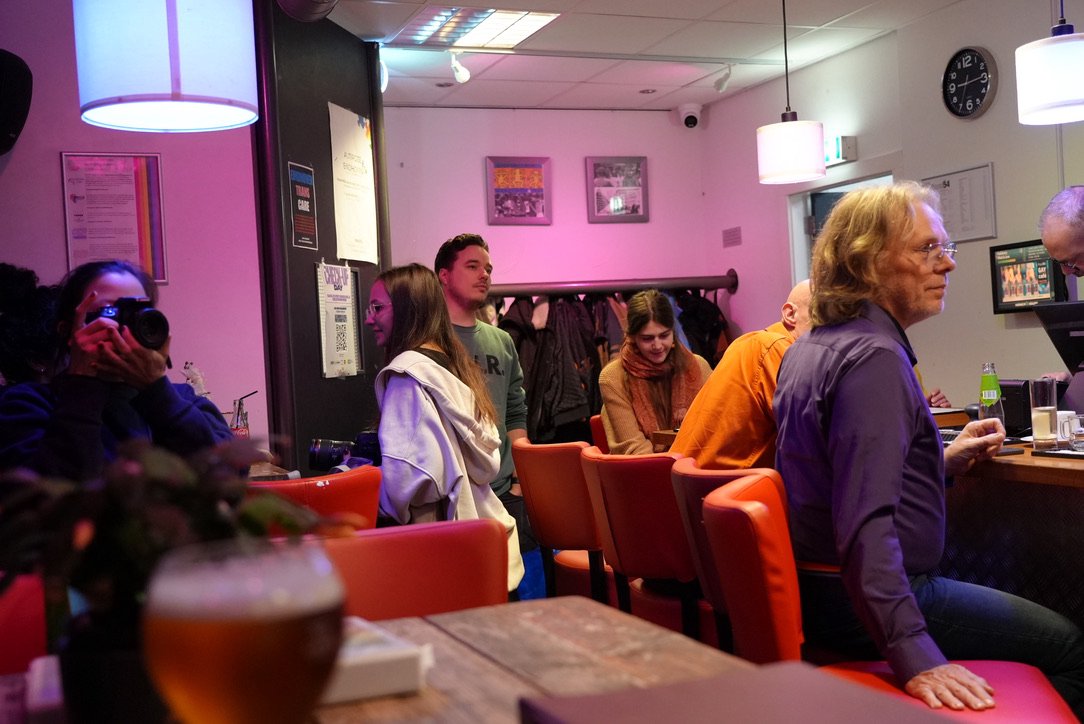
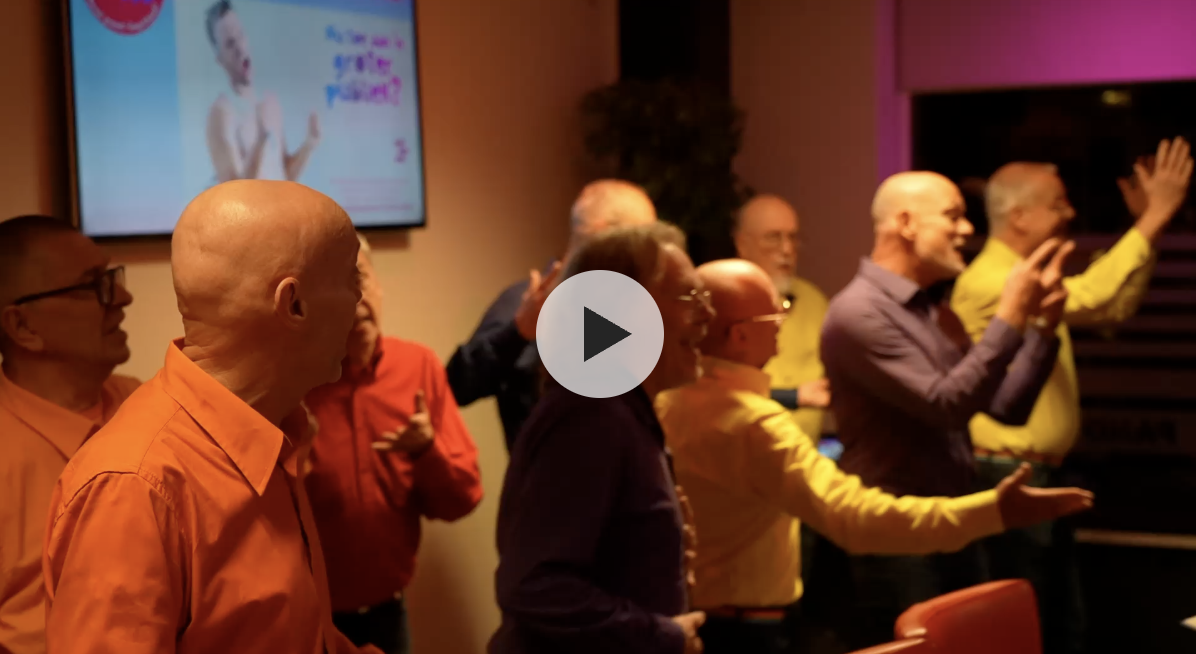
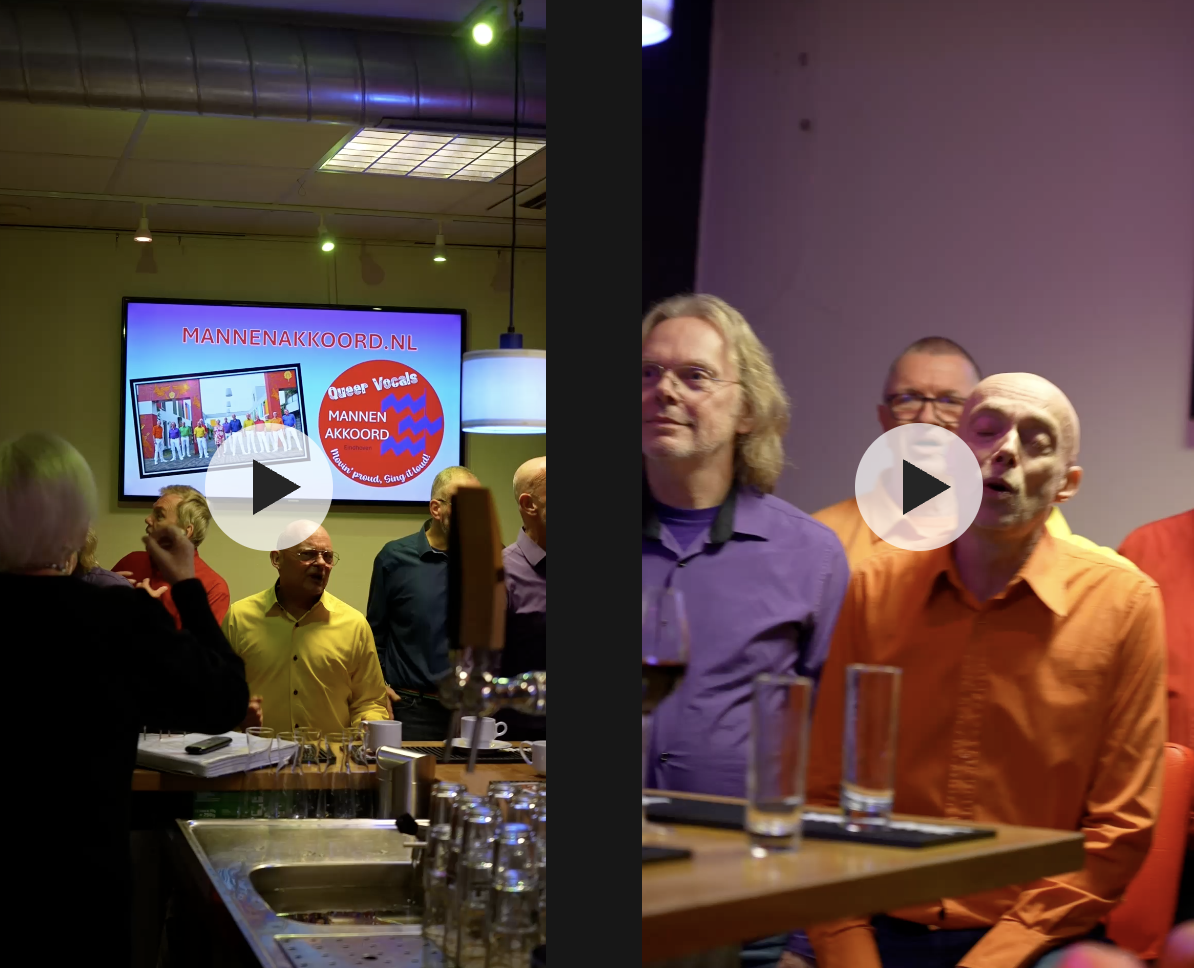
We filmed B-roll footage for a non-profit organization, and since the space was quite limited, I experimented with different camera angles to find effective shots. Our teacher was present and gave me direct feedback on shot composition, which helped guide my decisions during filming.
How did it go
The feedback made a big difference—I adjusted my framing and positioning based on the suggestions and noticed my shots improving. It was a challenge to move around in a tight space, but trying out new angles and reviewing the results helped me work more creatively.
What did I learn
I learned that being open to on-the-spot feedback is a key part of the creative process. Testing different ideas and reacting quickly helped me get better results. I also learned how to adapt my filming approach based on both space limitations and expert advice.
Retrospective
I’m glad we adjusted our shots on-site and applied feedback right away. It made a clear difference in the quality of the B-roll. Next time, I’d try more creative movements to make the footage feel more dynamic.
Finalising Transitions
What did I do
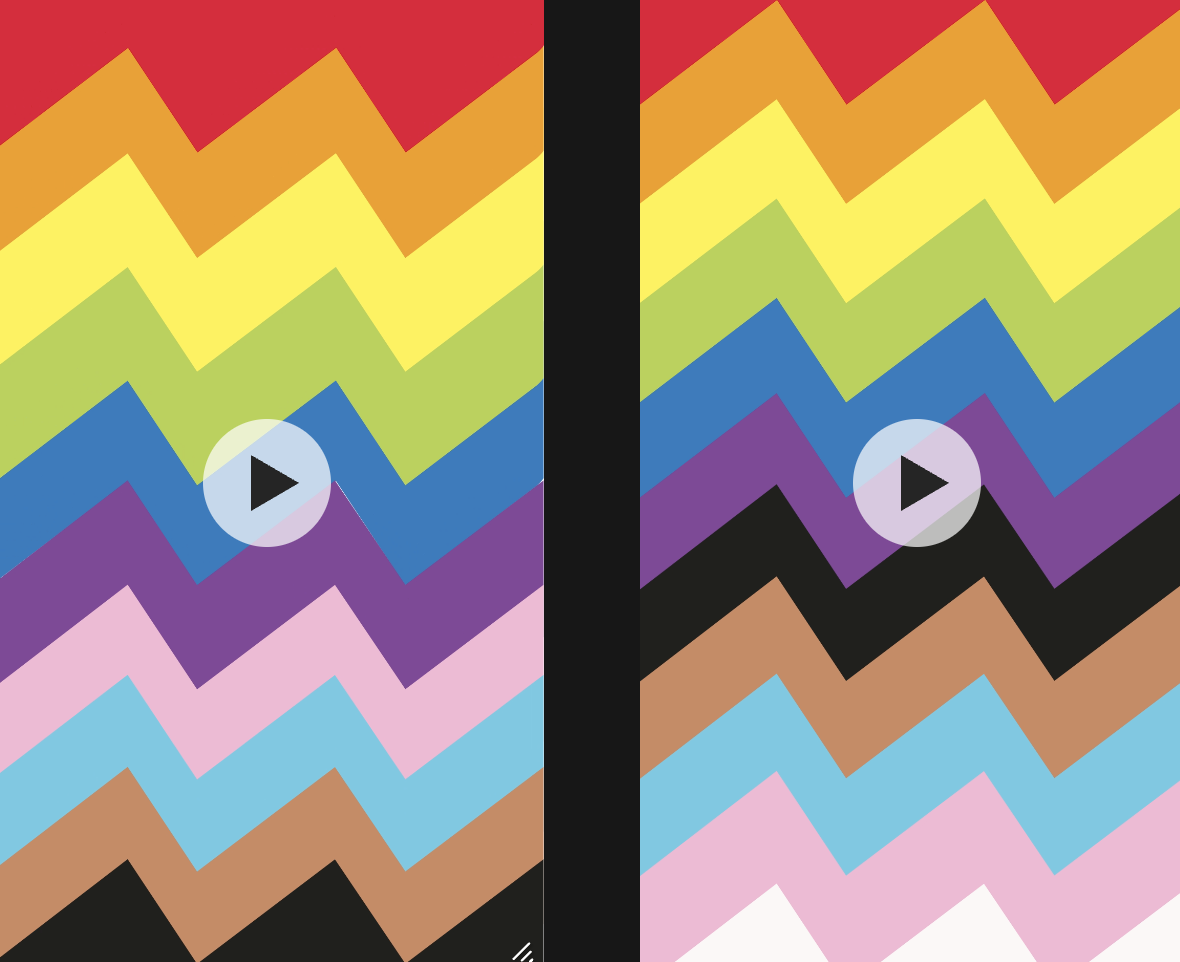
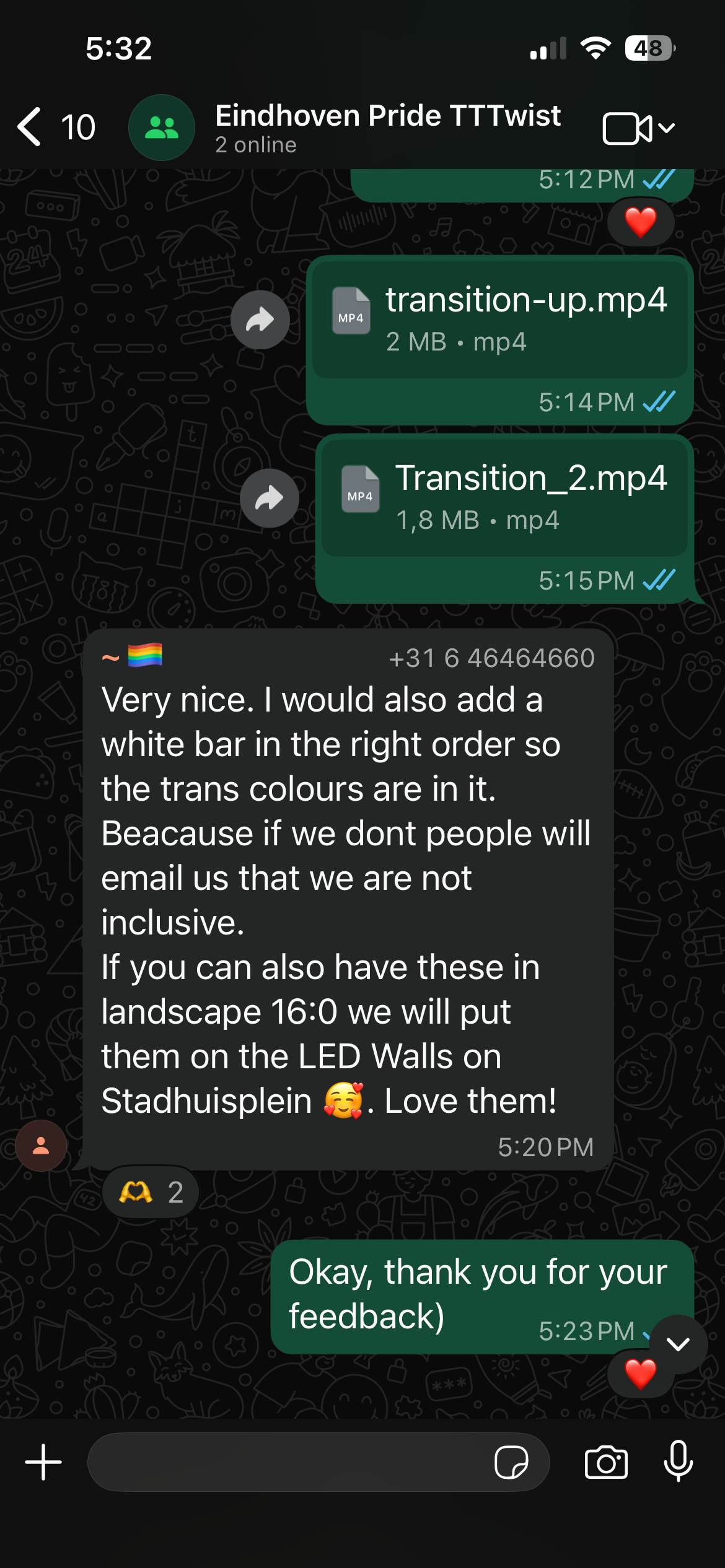
Before finalizing the animated logo and transitions for the reels, I reached out to the client for feedback. This step helped ensure the design direction aligned with their expectations, especially before committing to the final render.
How did it go
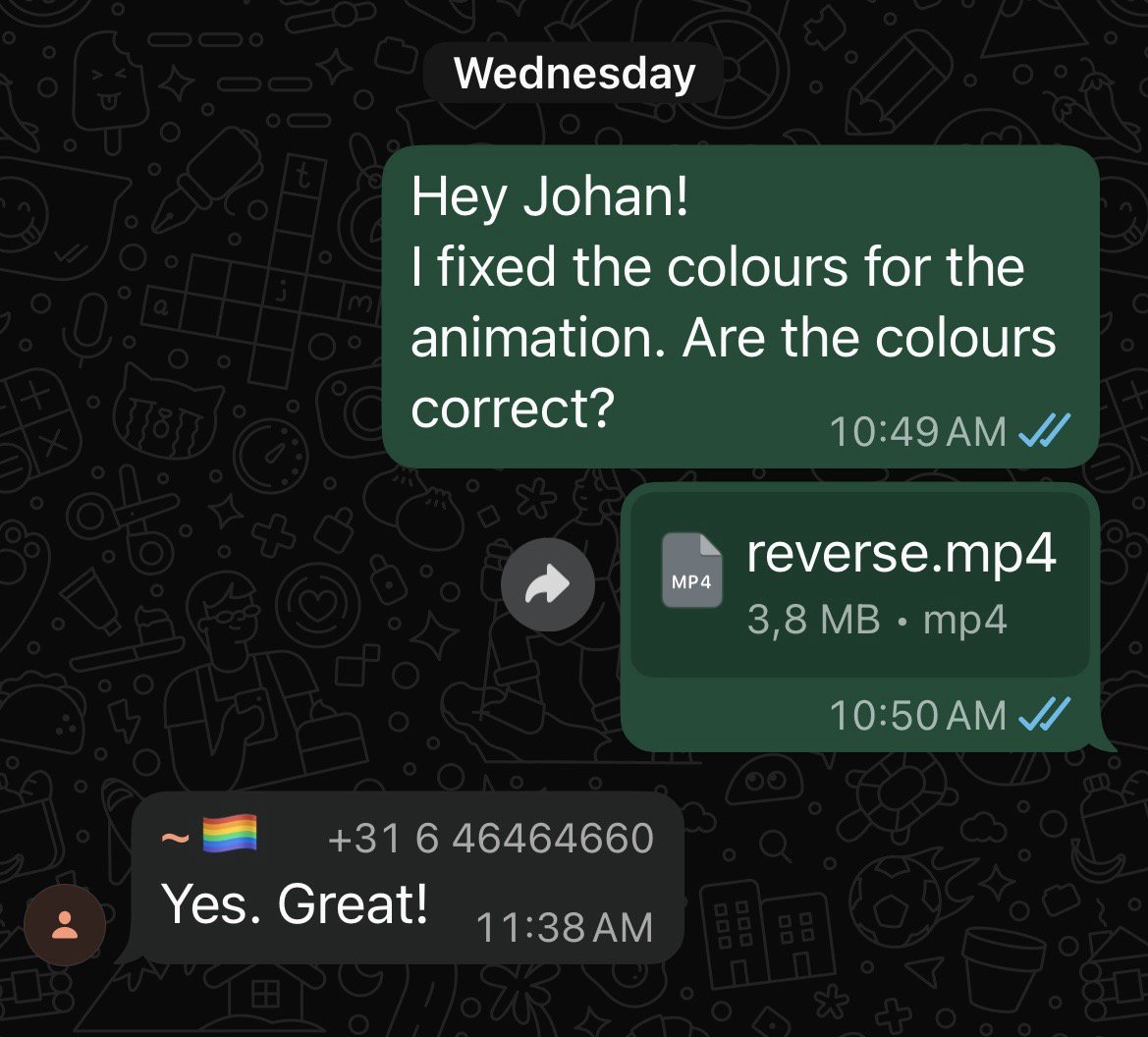
It directly supported iterative design thinking. The client pointed out that I had missed including white, a key colour from the Eindhoven Pride brand, which I had overlooked due to its absence in the brand book. By quickly incorporating that feedback, I strengthened the design’s integrity and relevance.
What did I learn
I learned how crucial it is to involve the client during intermediate stages, not just at the end. It confirmed that feedback loops are an essential part of the creative process, and that missing even small brand elements can affect the overall message.
Retrospective
Next time, I would double-check brand values and ask about colour priorities upfront, even if they seem missing from provided assets. Building in earlier feedback moments can prevent delays and create a smoother design iteration process.
User Testing for my website
What did I do
I organised a small user test with classmates to see if my portfolio website was easy to use. I asked them to check how they moved through the site and if they could easily find the main sections, like the learning outcomes and video.
How did it go
The feedback was very helpful. My classmates said it wasn’t clear that they needed to scroll to find the ticket, and they suggested adding “Next LO” button. They also wanted the video to play in full screen. After making these changes, I showed the website again, and it was much easier for them to use.
What did I learn
I learned how important it is to test designs with real users. People use websites differently than I expect, so feedback helps me improve my ideas. I also saw that small updates, like clearer buttons or signs, can make a big difference in user experience.
Retrospective
Next time, I will do user testing earlier and with more people. That way, I can make useful changes before finishing the design, and the final result will be stronger and easier to use.